
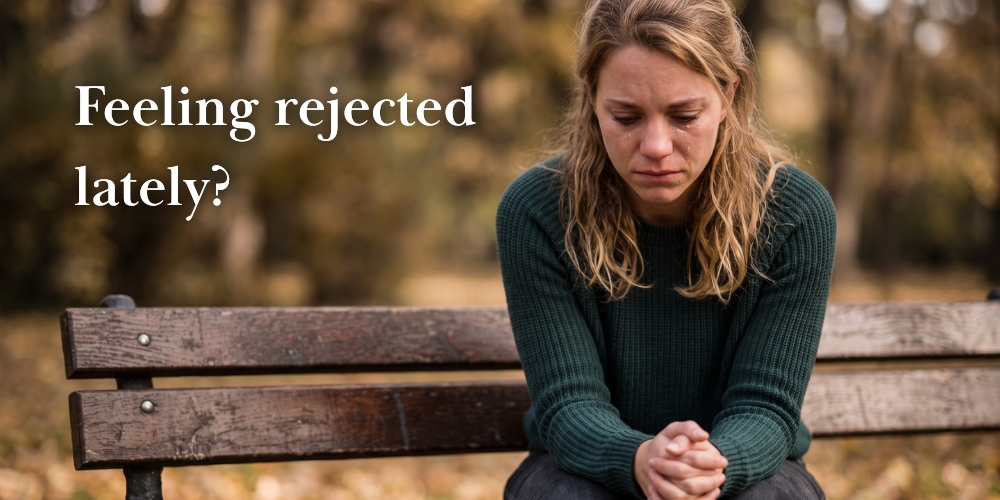
Can You Still Know Your Worth, Your Value, and That You Are Loved?
What if being rejected, misunderstood, or not chosen doesn’t actually change who you are?
Have You Ever Asked Yourself This?
Have you ever sat alone after a difficult conversation, a breakup, a disappointment, or an unexpected loss and wondered:
“Maybe I’m not enough.”
“Maybe if I were different, they would have stayed.”
“Maybe if I worked harder, loved better, looked different, achieved more, or said the right thing, I would have been chosen.”
Most people won’t say these thoughts out loud, but many carry them quietly.
As I reflect on June 2026, one theme seemed to appear everywhere—in my counselling room and in my own personal journey.
Different stories.
Different people.
Different circumstances.
Yet the same question underneath them all:
Can I still know who I am, what I am worth, and that I am loved when people reject me, misunderstand me, leave me, or do not choose me?
If you’ve been asking that question lately, you are not alone.
And perhaps more importantly – you are not broken.

Understanding the Pain Beneath Rejection
Humans are wired for connection.
Research consistently shows that social rejection activates many of the same brain regions involved in physical pain. In other words, rejection doesn’t just hurt emotionally—it can genuinely feel painful.
This is why being left out, criticized, abandoned, misunderstood, or replaced can shake us so deeply.
But there is often something even more painful happening beneath the surface.
The event itself becomes attached to a meaning.
For example:
“They left me” becomes “I am not lovable.”
“They chose someone else” becomes “I am not enough.”
“They misunderstood me” becomes “My voice doesn’t matter.”
“They rejected me” becomes “I have no value.”
In Cognitive Behavioral Therapy (CBT), we call these core beliefs—deep conclusions we have developed about ourselves over time.
The problem is not always what happened.
The problem is often the story we tell ourselves about what happened.
And sometimes that story has been developing for years.
Why Does Rejection Affect Us So Deeply?
Most people think their pain comes only from the present situation.
Often it doesn’t.
Current rejection tends to wake up older wounds.
A person whose parent was emotionally unavailable may feel devastated when a partner becomes distant.
Someone who experienced childhood criticism may feel crushed by constructive feedback at work.
A person who was abandoned may experience intense anxiety when someone important pulls away.
The present moment presses on an old bruise.
This is why two people can experience the exact same event and react completely differently.
The event is not the whole story.
The history behind the event matters too.

Your Nervous System Remembers
Trauma researchers often explain that the nervous system stores emotional experiences.
When something reminds us of a previous hurt, our nervous system can react as though the old pain is happening again.
Suddenly:
- Anxiety increases
- Sleep becomes difficult
- Overthinking takes over
- We seek reassurance
- We question ourselves
- We become hypervigilant
It can feel overwhelming.
But understanding this is important:
A triggered nervous system is not proof that something is wrong with you.
It is often evidence that something inside you still needs healing.
Common Misconceptions About Worth and Identity
Myth #1: If Someone Rejects Me, There Must Be Something Wrong With Me
Not necessarily.
People reject things for many reasons:
- Their own fears
- Their own limitations
- Different values
- Different goals
- Different seasons of life
A rejection often reveals compatibility—not worth.
Myth #2: Being Chosen Determines My Value
Many people unknowingly build their self-worth on being chosen.
Chosen by a partner.
Chosen by family.
Chosen by friends.
Chosen by employers.
Chosen by social media.
But if your value depends on being chosen, your worth becomes vulnerable to every opinion around you.
Healthy self-worth recognizes:
Being chosen is wonderful.
But it is not the source of your value.
Myth #3: If Everyone Understood Me, I Would Feel Better
Sometimes people simply don’t understand us.
And that can be painful.
But emotional maturity includes learning that not everyone will fully understand your story.
You can know who you are even when others don’t.
Myth #4: Confidence Means Never Feeling Hurt
Confidence is not the absence of pain.
Confidence is the ability to remain connected to your identity even when pain shows up.
Practical Tools to Rebuild Identity and Self-Worth
- Separate Facts from Interpretations
When something painful happens, write down:
What happened?
Then ask:
What am I making it mean about me?
Example:
Fact:
“She ended the relationship.”
Interpretation:
“I am unlovable.”
These are not the same thing.
Learning to separate facts from interpretations is one of the most powerful CBT skills you can develop.
- Identify the Old Story
Ask yourself:
- When have I felt this way before?
- What does this situation remind me of?
- Is this pain only about today?
- What old belief is being activated?
Many people discover that today’s pain is connected to yesterday’s wound.
Awareness creates freedom.
- Create a Stable Identity List
Write down answers to these questions:
Who am I when nobody is praising me?
Who am I when nobody is choosing me?
Who am I when I fail?
Who am I when life feels uncertain?
Your answers might include:
- I am resilient.
- I am compassionate.
- I am honest.
- I am growing.
- I am capable.
- I am worthy of respect.
Identity becomes stronger when it is based on character rather than circumstances.
- Challenge the “Not Enough” Narrative
Whenever you hear yourself thinking:
“I’m not enough.”
Ask:
According to whom?
And:
What evidence supports the opposite?
Our minds often collect evidence for our fears while ignoring evidence of our strengths.
Balance requires examining both.
- Practice Self-Compassion
Research by psychologist Dr. Kristin Neff shows that self-compassion is associated with greater emotional resilience, lower anxiety, and improved well-being.
Try speaking to yourself the way you would speak to a friend.
Not with excuses.
Not with denial.
But with kindness.
Because growth happens more effectively through compassion than through self-criticism.
What Transformation Looks Like
Healing does not mean you stop feeling disappointed.
It means disappointment no longer defines you.
The transformation often sounds like this:
Instead of:
“They rejected me, therefore I have no value.”
You begin to say:
“Their choice hurt me, but it does not define me.”
Instead of:
“Nobody understands me.”
You begin to say:
“Not everyone understands me, and I still know who I am.”
Instead of:
“I was not chosen.”
You begin to say:
“I was not chosen in this situation, but my worth remains unchanged.”
That shift changes everything.
Not because life suddenly becomes easy.
But because your identity becomes rooted in something deeper than circumstances.

A Personal Reflection
As a counsellor, I have noticed something remarkable.
The strongest people are not those who never experience rejection.
They are the people who learn to return to themselves after rejection.
They learn that pain can visit without becoming permanent.
They learn that loss can occur without stealing their identity.
They learn that being misunderstood does not mean they are invisible.
And they learn that being left behind does not mean they are unworthy.
For those of us who have faith, there is also a profound comfort in remembering that our value was never meant to come solely from human approval.
People may misunderstand us.
People may disappoint us.
People may leave.
But our worth remains intact.
Final Thoughts
If June taught me anything, it is this:
Life can remove many things.
Relationships can change.
People can leave.
Opportunities can disappear.
Plans can fall apart.
But none of these things have the authority to determine your worth.
Your value is not something you earn.
It is something you recognize.
Your identity is not something other people get to define.
It is something you discover and strengthen over time.
And being loved begins with understanding that your worth existed before anyone accepted you—and it remains after someone rejects you.
Hold onto that truth.
Especially on the days when it feels hardest to believe.
Ready to Take the Next Step?
Take a few minutes today and ask yourself:
“What have I been allowing other people’s choices to say about my value?”
Write down your answer.
Challenge the story.
Choose a healthier belief.
And if you find yourself struggling to rebuild your sense of identity, worth, or trust after rejection, loss, trauma, or relationship difficulties, know that you do not have to walk that journey alone.
Healing begins when we become willing to examine the stories we have believed—and discover that a different story is possible.
Hope. Courage. Transformation.
Hold onto that truth.
Especially on the days when it feels hardest to believe.


